


Automotive Technologies
Does Vehicular High Tech Mean High Risks?

$5 million settlement
We recently won a $5 million settlement for a wrongful death & injury case to survivor due to car crash.
Automotive Technology Cause Your Accident?
Let’s start with some good news: Automotive technologies which have improved safety have clearly saved lives, according to the National Highway Traffic Safety Administration (NHTSA).
NHTSA data indicate that, from 1960 to 2012, these safety-oriented technological improvements have saved 614,000 lives. That’s as many people as live in nearby Louisville, KY! The technologies responsible for saving lives have included improvements largely to automotive braking and steering systems and to passenger restraints. Improvements continue in these areas, such as Automatic Emergency Braking (AES), which helps avoid rear-end collisions.
But, some tech—such as smart phones, dashboard entertainment or navigation systems, and other systems currently in development—serves to distract us from our primary task when we are behind the wheel, and that task is safe driving. Distracted driving has become a significant problem in the U.S., taking lives instead of saving them. It might not yet be as pressing a state of affairs as driving under the influence (DUI), but distracted driving is, unfortunately, a growing one.
What is Distracted Driving?
Distracted driving has been around almost since the beginning of automobiles. Whereas distractions a couple of generations ago might have consisted of lighting cigarettes, talking with passengers, and tuning the radio dial, today we have multiple opportunities to let our attention wander—consider smart phones, GPS systems, entertainment systems, food from drive-thru windows, and so on. Any non-driving activity that keeps us from paying attention to the road qualifies as distracted driving.
According to the National Highway Traffic Safety Administration, there are three main kinds of distracted driving:
- Visual distractions are those which take our eyes off the road, such as looking at maps, GPS systems, cell phones, or turning to talk with passengers.
- Manual distractions are those which take our hands off the wheel, such as dealing with a child or a pet, or eating, drinking, or texting on a cell phone.
- Cognitive distractions are those which take our attention off the task of driving. These days, such a distraction can be almost anything at all—personal grooming or putting on makeup, arguing with a passenger, changing the music on the iPod, dealing with a screaming child, adjusting the car’s comfort settings, making a mental list of errands, and so on.
Other common distracted-driving activities include reading, surfing the internet, and talking on the phone — with or without a hands-free system.
Particularly hazardous is texting, because it involves all three kinds of distractions: you’re not looking where you’re going, your hands are not on the wheel, and your mind isn’t on your driving. During the month of December, 2013, U.S. residents sent over 153.3 billion texts. Most months have similar numbers. How many of these texts were sent while driving? We don’t know. But we do know that people who text while driving are much more likely to have an accident, partially because reaction time while texting is about 30 percent worse than it normally is. Not only that, but five seconds is the average amount of time your eyes are off the road while texting. If you’re driving 55 mph, that’s enough time to drive the length of a football field—blindfolded.
Request a Free Consultation
We take the hard cases – and win them! Free consultation, no obligation.
How Big Is the Problem of Distracted Driving?
Big.
The FocusDriven® Nationwide Insurance study speculates that up to 80 percent of accidents—that’s an amazing four in five—encompasses some form of distracted driving. And an awful lot of our distracted driving is due, in one way or another, to our computers in our pockets—our smart phones. Using our phones while driving can be implicated in up to 1.6 million automobile crashes every year; in 2013, this translated into 424,000 people injured and 3,154 fatalities. According to the NHTSA, roughly 1,000 of those fatalities involved distracted driving with cell phones.
According to the Indiana Criminal Justice Institute (ICJI), distracted driving was responsible for more than 9,000 vehicular accidents on Indiana roads in 2011. Of these, more than 9,000 accidents, approximately 1,000 of them involved a cell phone.
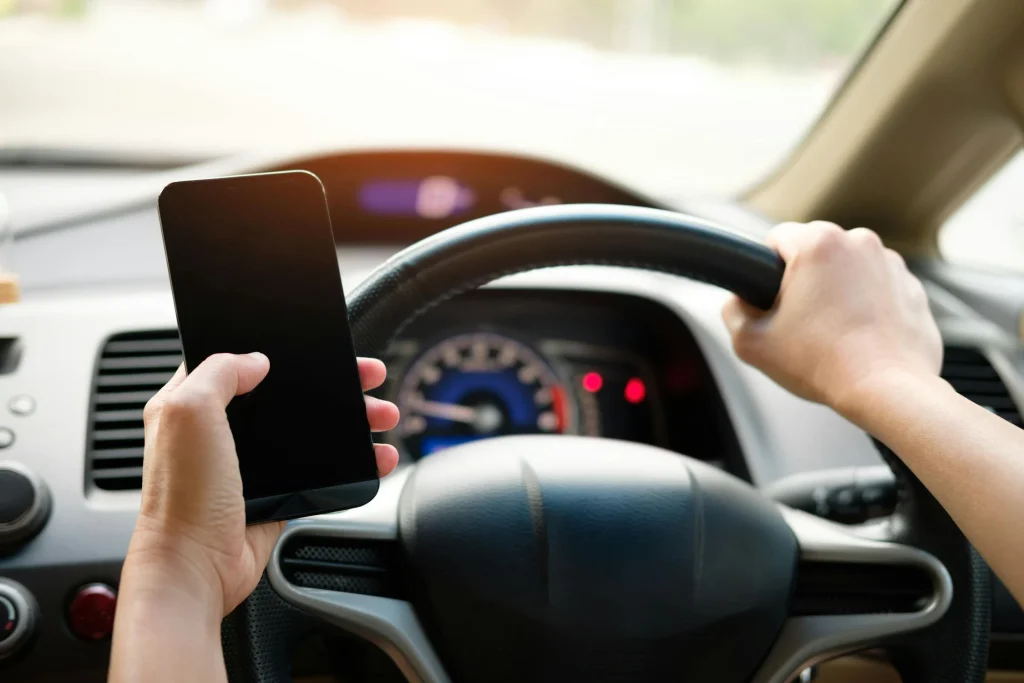
Indiana police are frustrated as well, because the problem is not limited to cell phone usage. While texting is against the law for everyone, no law exists that prohibits drivers from talking on their phones (unless they are under 21), or eating, or using a GPS device, or engaging in other distracting activities. Sgt. Ryan Lebo of the Indiana State Police considers all distracted driving a major concern. “Whether drivers use a hands-free device or not isn’t typically the big problem,” he said. “The problem is the attention separation. Everyone who drives and talks on the phone is guilty of it.”
The “attention separation” problem mentioned is likely to get worse. More technology is coming, but only some of it is good.
The Good, the Bad, the… Safe?
Some of the automotive technology that is new, or will be available soon, does benefit us. Here’s a partial list of technological features available, but, at the moment, perhaps only in a few luxury model cars:
- In-Car Connectivity: powers Wi-Fi access for certain compatible devices. A good thing if it’s used by passengers or for providing entertainment for the kids; not so great if you use it yourself while driving.
- Parking Assist: runs the gamut from beeping sensors to cars that park themselves. Useful tech that should prevent parking errors and fender benders.
- Touchscreen Infotainment: a central touchscreen that controls audio, your phone, navigation, and the car’s comfort settings. Potentially distracting. Don’t use it when you’re supposed to be paying attention to the road.
- Forward-Collision Mitigation: monitors vehicles and other objects on the road ahead and warns you of imminent collision. Some systems even stop the car automatically when they sense a hazard or apply the brakes harder if the system thinks you aren’t pressing the brake pedal hard enough. This improvement is genuine force for good, but you’ll have to remember not to let your attention wander just because you’re counting on the car’s doing the stopping for you. The NHTSA calls forward-collision mitigation Automatic Emergency Braking (AES) systems, and has endorsed them.
- Adaptive Cruise Control: maintains a preset distance between you and the car ahead. Again, it’s a good thing, but don’t relax too much.
Other technology that hasn’t yet received an official label that is either nearly here or is on the way soon:
- In 2016, some Cadillacs will offer “hands-free” highway driving as an option by General Motors. The feature is called “Super Cruise.”
- Audi has announced its own plans for a hands-free driving car that pilots itself through traffic jams.
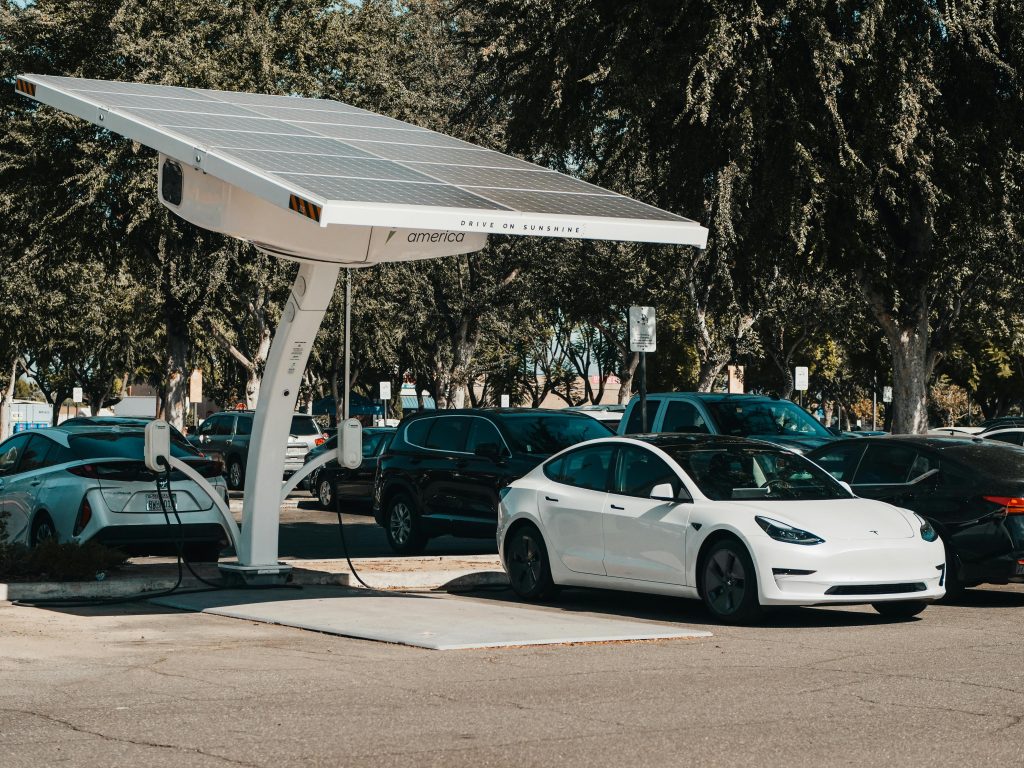
- Tesla’s Model S will have hands-free technology available later this year that can take over all the driving under certain highway conditions.
Theoretically, most of these features will increase safety — or at least not impact it negatively — but it’s entirely possible that systems such as those that follow cars ahead at a safe distance, or that automatically stop the car in a braking emergency, might lull drivers into a false sense of security. Such advanced safety features as hands-free driving could even lead to more distracted activities, such as texting, calling, or surfing the Web.
“Google Glass” for Your Car
Google Glass: the wearable headset that resembles eyeglasses, displaying the contents of your smartphone (email, texts, messages) on a screen in an upper corner. There hasn’t been much about Google Glass in the news lately. However, something being touted as “Google Glass for your car” is under development, though the technology is still in its infancy. And it sounds risky.
Also known as “windshield devices,” these high-tech items project data from your phone onto your windshield. A company called Navdy has developed technology that puts up a transparent display in front of you, allowing you to use touchless swipes to answer a call or dismiss a message. It also has voice recognition software so that you can tell it to write a text or call someone through your phone.
The idea, and the argument, is that drivers are going to multitask no matter what, and that a windshield device minimizes some of the hazards of doing so. But some argue that these new technologies only encourage risky behavior. Not only that, researchers who specialize in the science of attention know that focusing properly is more than just seeing. The hazards involved in using windshield devices are as clear as, well, glass. “It’s a horrible idea,” said Paul Atchley, a psychologist at the University of Kansas who studies driver distraction. “The technology is driven by a false assumption that seeing requires nothing more than having the eyes fixed on the right spot.”
The idea that we can engage in social media while piloting half a ton to a ton of machinery at high speeds might be a dangerous belief to hold.
The Ultimate: The Car That Drives Itself
Tesla’s forthcoming technology that enables its Model S to take over all the driving under certain conditions leads us to the matter of driverless cars. Google, of course, has been working on them for a few years, and has sent their “AVs” (autonomous vehicles) out on California roads, resulting in 12 minor accidents (none of which was the Google car’s fault). Recently, BMW and Baidu announced a partnership to develop a self-driving car which will be road-tested on highways in Beijing and Shanghai.
However, it will likely be years before driverless cars appear in numbers on our highways.
Is All of This Legal?
All of these innovations beg the question: Are these new technologies legal?
The fact is, few states have laws regulating technological advances except to allow for research and development. For example, hands-free driving, as mentioned above, isn’t regulated at all. Only New York has a law requiring that one hand be on the wheel at all times, and it dates from 1967. In the absence of specific laws against it, hands-free driving is, therefore, legal. And carmakers are taking advantage of the lack of regulation and pushing ahead with their ideas.
Hands-free driving is only one of several legal issues. Take the matter of driverless cars. How do we deal with liability in the case of an accident? If it is our car, will we be able to override the computer so we can do the driving when we need to? And, if so, how does that change the liability laws? How will auto insurance coverage have to change? The questions seem only to bring more questions.
New technologies such as the ones mentioned may well require more study and consideration before making them widely available. No doubt it will take the law a while to catch up.
Indiana Car Accident Attorney
Under the law, distracted driving involving the use of an electronic device behind the wheel may be considered reckless driving or negligent operation of a motor vehicle. Parties who have suffered injury or property damage or the loss of a loved one have a right to be made financially whole.